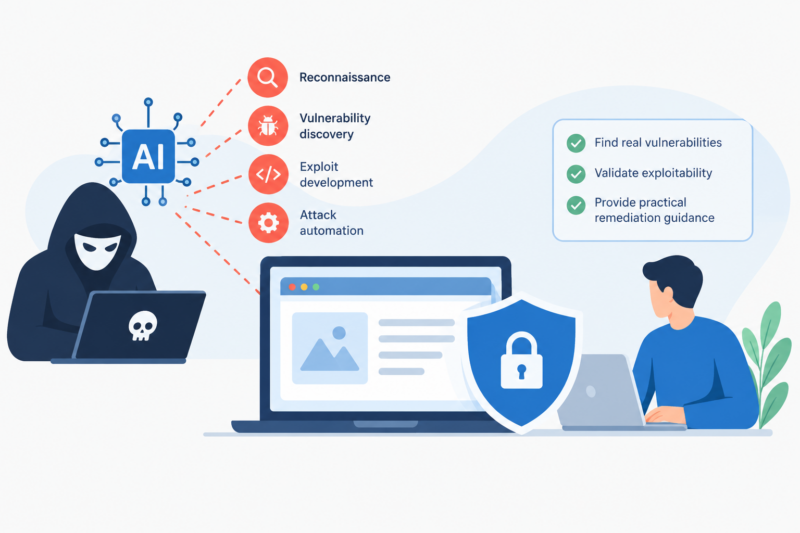
AI-Powered Cyberattacks: Why Your Web Application Needs a New Security Assessment
Your web application passed a penetration test two years ago. Does that mean it


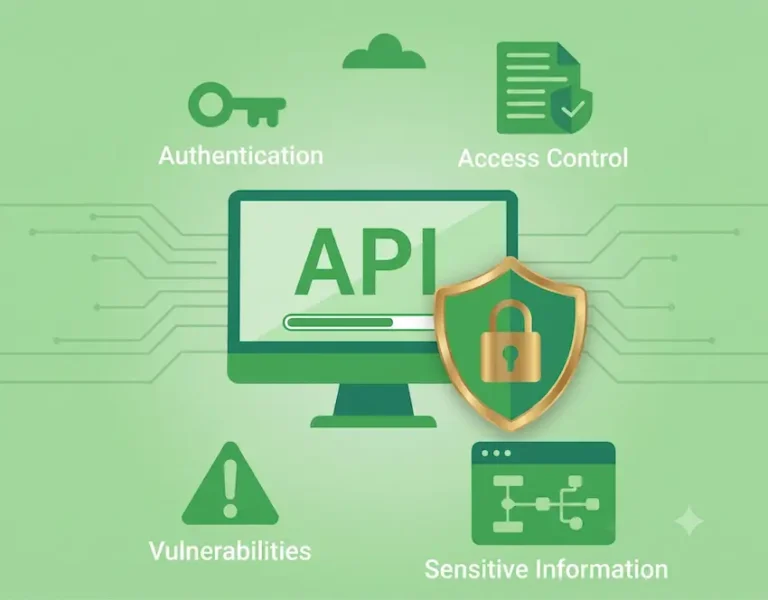
An API Penetration Test evaluates the security of the backend interfaces that power modern web applications, mobile apps and system integrations. Rather than testing what users see in a browser, it interacts directly with backend APIs to identify vulnerabilities that attackers can exploit.
While a traditional Web Application Penetration test assesses the browser-facing interface, an API Penetration test bypasses the user interface entirely to test the application’s underlying business logic and communication layer.
This helps identify vulnerabilities that may not be exposed through normal user interactions.
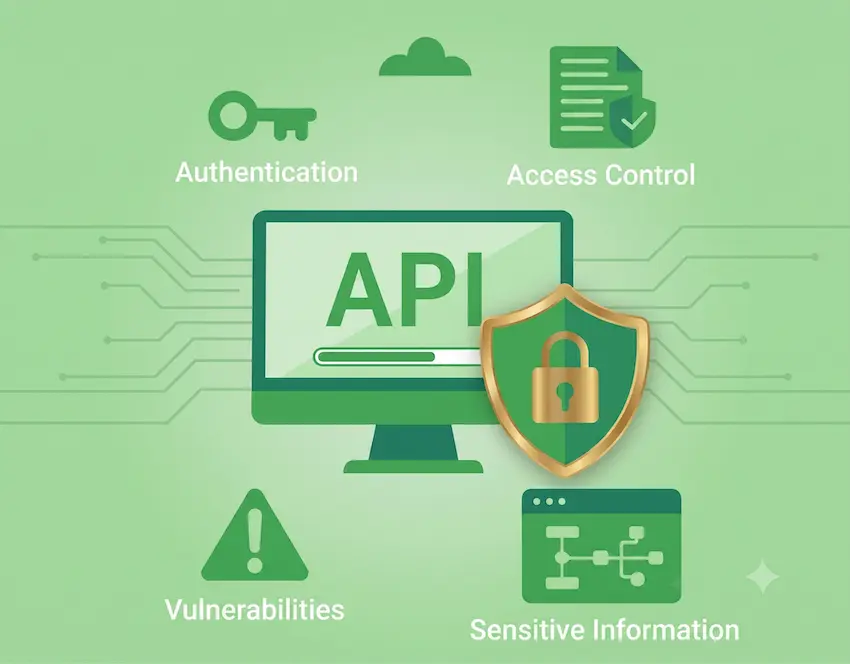
Our API VAPT assesses critical backend security controls, guided by the OWASP API Security Top 10, including
The Strategic Analogy
A traditional web application pentest verifies whether the front door, windows, and physical locks of an office building are secure. An API pentest examines whether someone with legitimate access to the building can enter rooms they shouldn’t, access confidential files, or misuse internal services because access controls are weak.
Providing custom data feeds or reporting endpoints directly to your paying corporate clients creates highly trusted pipelines. A dedicated API pentest ensures your multi-tenant isolation is flawless, guaranteeing a client cannot manipulate an API request to view a competing company’s private records.
Allowing third-party vendors to connect to your backend APIs to place orders or check stock—such as logistics providers, supplier webhooks, or payment gateways—opens deep perimeter gaps. Rigorous testing validates that these automated partner links cannot be exploited to bridge into your private corporate network.
If your enterprise software allows external developers to build custom integrations or add-ons on top of your platform, you are exposing raw system logic. Regular API Penetest is critical to ensure untrusted third-party code cannot exploit your core authorization structures.
A malicious user manipulate identifier parameters inside data requests, tricking the application into revealing other users’ data records.
Improper verification within authorization signatures, missing login rate limits or poor tracking of issued authentication tokens. E.g. allowing over 5 concurrent tokens per account.
Endpoints lacking request rate limits or request size thresholds, allowing attackers to abuse the API beyond its intended use. E.g. rapidly exfiltrate sensitive data.
Failure to restrict access to sensitive business flows based on user role. E.g. Allowing an operator role to update an administrator role’s password.
Improper configuration of API security controls, such as default settings, unused features, exposure of API documentation set, increasing the attack surface.

Licensed by CSA under CSRO and onboarded as a CISOaaS VAPT provider, ensuring accountability and regulatory compliance.
Licence No CS/PTS/C-202606-336

Our consultants hold industry certifications including CREST, CISSP and AWS, backed by over 20 years of practical cybersecurity and infrastructure experience.

Standard pentests show what breaks. Positive Attestations show what held — backed by execution logs and evidence, providing strong proof for your auditors.
We highly recommend a grey box approach for API testing to get the maximum value for your budget:
Black Box Testing: Engineers simulate an outsider with zero prior knowledge. They must guess hidden endpoint URLs and parameter names from scratch, which often results in a surface-level assessment.
Grey Box Testing: You provide our engineers with API documentation (like Swagger/OpenAPI specs or Postman collections) and test accounts with different privilege levels. This eliminates time-consuming guesswork, allowing our team to immediately jump into deep, context-aware testing.
Not necessarily. Attempting to deeply pentest hundreds of endpoints simultaneously is rarely practical. Instead, we recommend a risk-based, tiered scoping approach to maximize your budget:
Tier 1: High Risk (Deep Manual Pentest): Public-facing APIs, authentication gateways, and endpoints handling sensitive data (PII) or financial transactions.
Tier 2: Medium Risk (Targeted Assessment): Partner-facing APIs and critical internal microservices. We run focused, time-boxed testing on their primary logic paths.
Tier 3: Low Risk (Automated Scanning): Internal, read-only, or non-sensitive APIs covered via automated vulnerability scanning to catch low-hanging fruit.
A penetration test is not a QA exercise, and its coverage is determined by the agreed scope, objectives and testing depth. While APIs can be tested as part of a Web or Mobile VAPT, not every API endpoint or security scenario may receive the same level of attention.
If you want greater assurance that your APIs are adequately tested, particularly those handling sensitive data or critical business functions, a dedicated API penetration test targeting the relevant endpoints is recommended.
Yes, our testing methodology is guided by the OWASP API Security Top 10 framework. We focus our assessments on the most critical, high-prevalence vulnerabilities and logic flaws within this standard that pose the greatest risk to your business
No. We prioritise operational stability throughout the engagement. During the initial scoping phase, we define clear rules of engagement and agree on the testing approach. Wherever possible, testing should be conducted in a staging or UAT environment that closely mirrors production.
If testing must be performed in production, we use controlled, non-destructive payloads and coordinate closely with your team to minimise operational risk and avoid service disruption. We also recommend performing a backup before testing begins as a precautionary measure.
To prevent unintended impact, all testing is performed only against the provided test accounts. We do not access or modify other user accounts.
Note: DDoS testing, social engineering and any other disruptive attack techniques are out of scope.
Our report consists of:
Your web application passed a penetration test two years ago. Does that mean it
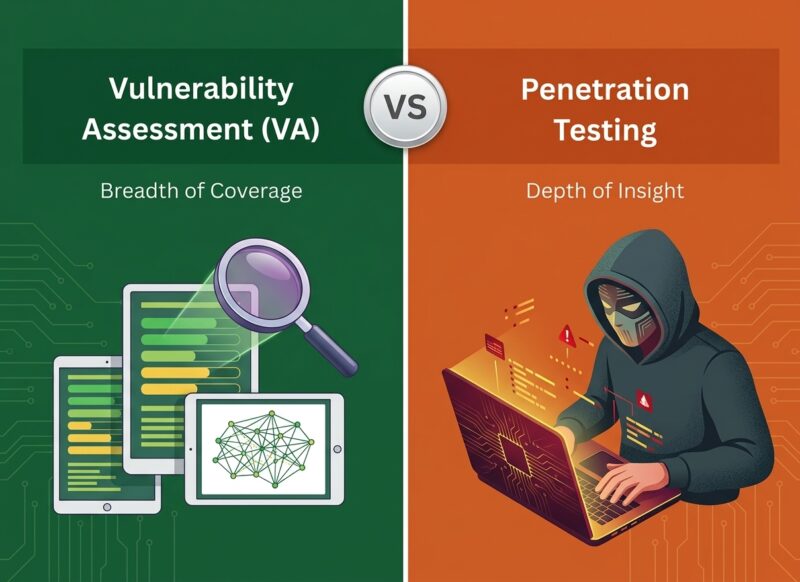
Not all web security assessments provide the same level of assurance. A Web Vulnerability
Modern web applications increasingly use Single Page Application (SPA) architectures, where the browser communicates