
LLM Injection: How Attackers Can Manipulate AI Chatbots
AI-powered chatbots and conversational assistants are becoming increasingly common in websites and business applications.



A mobile application penetration test is a security assessment of Android (.APK) and iOS (.IPA) applications, evaluating both the mobile application and its backend APIs to identify security vulnerabilities.
The assessment examines the mobile application for client-side weaknesses, including insecure data storage, reverse engineering, app tampering, and insecure network communications, while also testing the backend APIs for authentication, authorization, business logic, and other API security vulnerabilities.
Reverse engineer the compiled application to identify insecure code, hardcoded secrets, and configuration weaknesses.
.apk / .ipa binaries into readable codeAssess the application’s runtime behaviour using a physical device or emulator to identify client-side security weaknesses.
Mobile applications frequently store sensitive information on the device, making local storage a critical assessment area.
plist, XML shared preferences, and local log filesThe Defensive Mechanism: SSL Pinning forces the mobile app to validate the server’s exact X.509 certificate or public key against a hardcoded copy inside the binary, preventing attackers from using custom proxy certificates to inspect encrypted traffic.
Our Testing Methodology: We employ specialized runtime instrumentation scripts to attempt bypasses of your SSL Pinning implementation, verifying if a malicious actor on a compromised Wi-Fi network can successfully execute Man-in-the-Middle (MitM) data inspection.
The Defensive Mechanism: Root (Android) and Jailbreak (iOS) detection controls check whether operating system security boundaries are intact, shutting down the app if it detects elevated privileges that allow memory inspection or tampering.
Our Testing Methodology: Using dynamic hooking tools (such as Frida), our security engineers attempt to patch, hook, and bypass your detection checks in memory—proving whether an attacker can execute the app in a compromised environment to manipulate business logic.
Client-side application binary assessment
Compliance-Ready VAPT for Regulatory & Audit Sign-Off
High-Assurance Security Posture VAPT for Fintech & High-Risk SaaS

Licensed by CSA under CSRO and onboarded as a CISOaaS VAPT provider, ensuring accountability and regulatory compliance.
Licence No CS/PTS/C-202606-336

Our consultants hold industry certifications including CREST, CISSP and AWS, backed by over 20 years of practical cybersecurity and infrastructure experience.

Standard pentests show what breaks. Positive Attestations show what held — backed by execution logs and evidence, providing strong proof for your auditors.
Yes, eligible SMEs can apply for CISOaaS VAPT grant of up to 70%, cap at endpoint tier.
More details here.
A Web Application VAPT focuses primarily on server-side components, such as web pages, backend applications, APIs, authentication, authorization, and business logic that are accessed through a web browser.
A Mobile Application VAPT includes these server-side assessments but also evaluates the mobile application installed on the user’s device. Additional client-side testing includes reverse engineering the compiled application, analyzing insecure local data storage, assessing runtime behaviour, and validating security controls such as SSL Certificate Pinning, Root & Jailbreak Detection, and anti-tampering mechanisms. These client-side assessments help identify risks that are unique to Android and iOS applications and cannot be evaluated through a standard web application penetration test.
Lite Package: Best for hybrid apps, WebView wrappers (e.g., Capacitor, Ionic, Cordova), standalone apps, or clients who are already testing their APIs under a separate Web/API pentest. Focuses strictly on client-side security (binary reverse engineering, local data storage, hardcoded secrets, and local runtime behavior).
Essential Package: Best for standard mobile apps with user authentication where you need full end-to-end testing, including live API security, network traffic interception, and server-side vulnerability checks.
Enterprise Package: Best for complex applications with multiple user roles (e.g., Admin vs. Standard User), multi-tenant data isolation, custom business logic workflows, or strict compliance requirements.
If your backend APIs or web application are already covered under a separate Web Application or API Pentest, the Lite Package is the perfect complement. It ensures your mobile binary, client runtime, local storage, and app wrapper are secure without charging you twice for backend API testing.
An Application Security Control Assessment evaluates the effectiveness of security protections built into a mobile application to determine whether they can be bypassed under realistic attack scenarios. These controls are designed to make reverse engineering, traffic interception, and application tampering more difficult.
Typical assessments include validating the implementation and effectiveness of:
Where applicable, controlled bypass techniques are performed to verify whether these security controls can be circumvented by an attacker, helping organizations understand their effectiveness and identify opportunities for improvement.
This is included in the Enterprise package.
Yes for Essential and Enterprise package. Backend APIs that are used by the mobile application are included in the assessment. Since mobile applications rely on APIs to authenticate users, exchange data, and perform business functions, testing these APIs is essential to identify security vulnerabilities such as broken authentication, authorization flaws, insecure data exposure, and other API-related risks.
Yes. We support penetration testing for both Android (.APK) and iOS (.IPA) applications.
Where the Android and iOS applications share the same backend APIs and implement similar business logic, many organizations choose to test the Android application only as a cost-effective approach. Android applications are generally easier to assess due to the availability of testing and instrumentation tools, while common backend vulnerabilities are identified through the shared API assessment.
However, testing both platforms is recommended when the Android and iOS applications have different implementations, platform-specific features, or unique security controls. An iOS assessment can identify issues that are specific to the iOS application, such as Keychain usage, platform-specific storage, or iOS-specific security implementations.
Yes, our testing methodology is guided by the OWASP API Security Top 10 framework. We focus our assessments on the most critical, high-prevalence vulnerabilities and logic flaws within this standard that pose the greatest risk to your business
Duration depends on the scope:
Lite Package ~ 2-3 days
Essential Package ~1 week
Enterprise Package ~ 1.5 to 2 weeks.
Our report consists of:
AI-powered chatbots and conversational assistants are becoming increasingly common in websites and business applications.
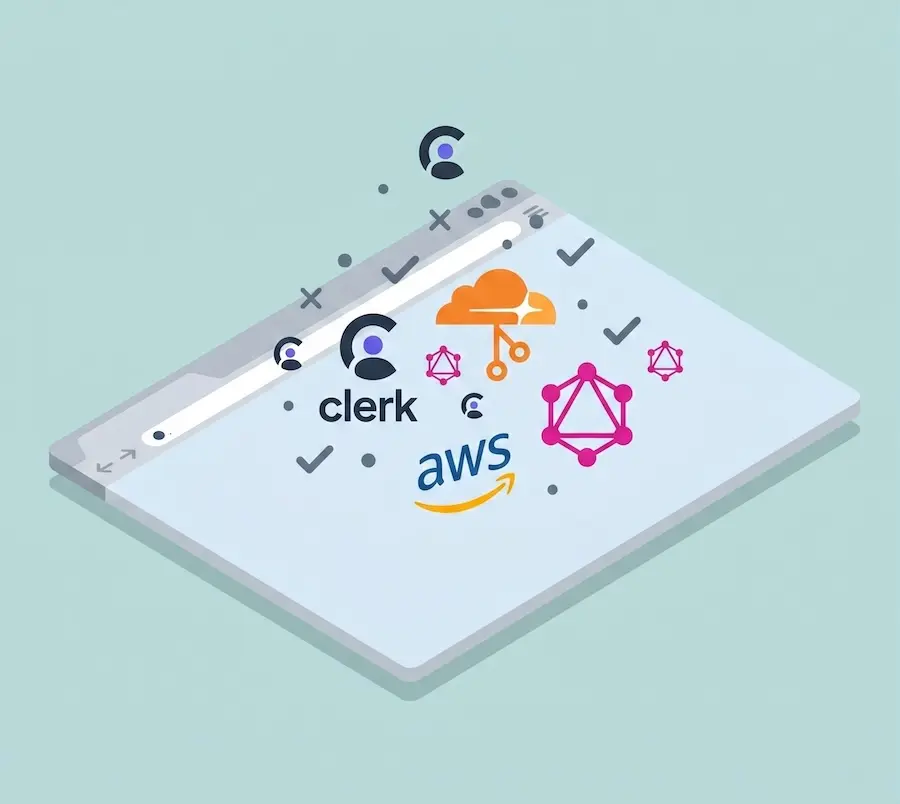
Modern applications are no longer built from scratch. Today, it is common for applications
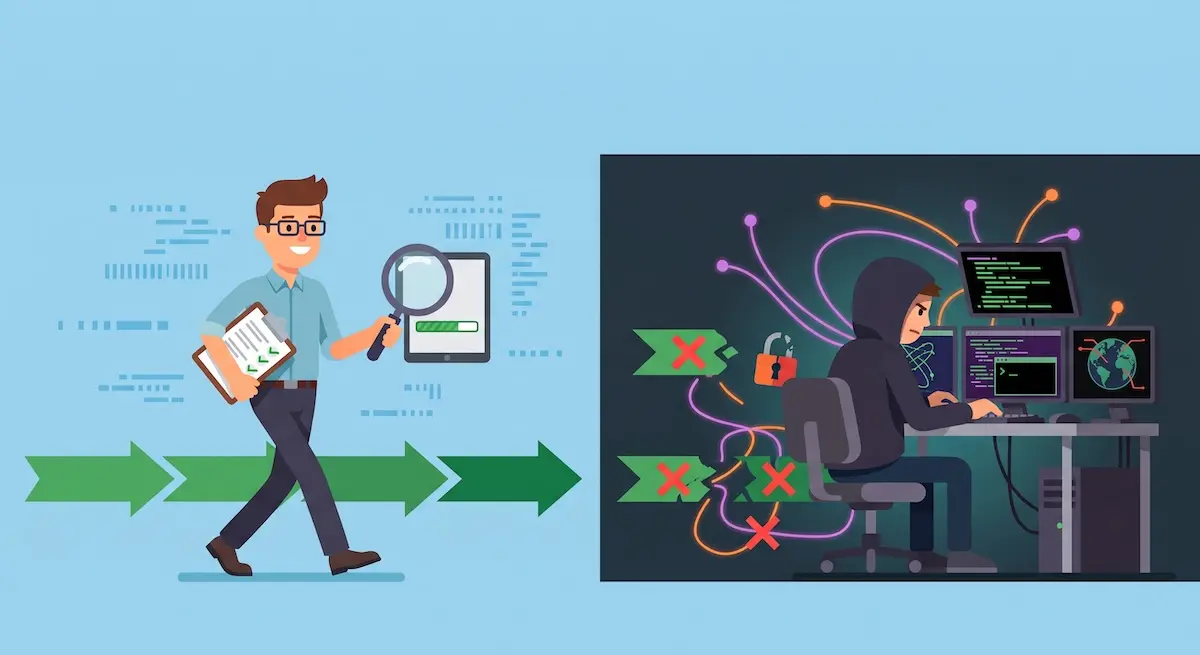
“But we already implemented that.” This is something we occasionally hear after reporting a