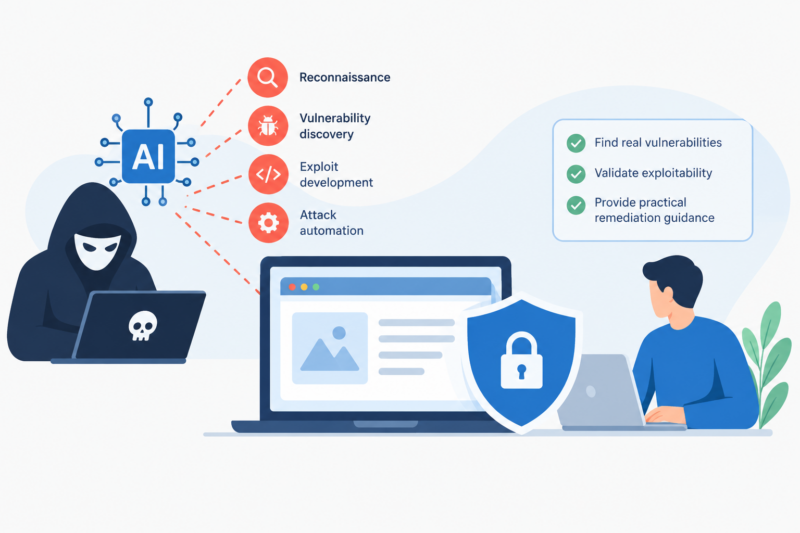
AI-Powered Cyberattacks: Why Your Web Application Needs a New Security Assessment
Your web application passed a penetration test two years ago. Does that mean it



Choosing the right Vulnerability Assessment and Penetration Testing (VAPT) depends on what you operate and why you need the test.
Most VAPT engagements fall into two dimensions:
Environment (Network or Application) and Approach (Black Box or Grey Box).
1) Choose by Your Environment
Network VAPT
Recommended if you operate physical offices, on-prem servers, or internal systems.
We focus on critical assets such as Active Directory, ERP systems and databases, where unpatched systems and credential exposure pose the highest risk.
Application VAPT (Web / API / Mobile)
Essential if your business relies on an Internet-facing application (e.g. SaaS, e-commerce, FinTech).
Our manual testing targets business logic flaws, broken access control, and privilege escalation that can lead to data breaches and regulatory impact.
WiFi VAPT
For high-footfall locations offering Wi-Fi services.
2) Choose by Your Objective
Compliance or client requirements (e.g. MAS TRM, government, enterprise partners)
→ Grey Box Network or Application Penetration Testing
Recent security incident or suspected compromise
→ Grey Box Network Penetration Testing to assess lateral movement and credential exposure
Handling sensitive customer data (PII) or intellectual property
→ Grey Box Application Penetration Testing to support PDPA compliance
Publicly accessible systems (e.g. kiosks, exposed hardware)
→ Black Box Network Penetration Testing
Internet-facing application without user self-registration
→ Black Box Application Penetration Testing to assess unauthenticated attack surfaces
Publicly accessible environments with guest and/or staff WiFi networks. (e.g. hotels, co-working)
→ WiFi Penetration Testing to assess Network Segmentation and Captive Portal bypass
Let us help you scope the most cost-effective test based on your risk profile and compliance requirements.
Share your requirements for an optimized quote tailored to your compliance needs
Lightweight VAPT for Standard & Marketing Websites
Compliance-Ready VAPT for Regulatory & Audit Sign-Off
High-Assurance Security Posture VAPT for Fintech & High-Risk SaaS
If our standard packages don’t fit, contact us for a customised VAPT solution tailored to your specific infrastructure

Singapore regulated entity, vetted and verified by CSA to ensure integrity and accountability. Licensed since June 2022 - Licence No CS/PTS/C-202606-336

Work directly with senior consultants in Singapore, with experienced expertise involved from scoping through testing and reporting.

Standard pentests show what breaks. Positive Attestations show what held — backed by execution logs and evidence, providing strong proof for your auditors.

Our professionals are CREST, CISSP and AWS-certified experts with over 20 years of hands-on experience.

We work alongside your team to support remediation efforts and provide practical mitigation strategies where full remediation is not feasible

Our customers come from Singapore government vendors, financial Institutions and corporate clients
Vulnerability Assessment and Penetration Testing (VAPT) is rigorous security evaluation used to identify and remediate weaknesses in your network and applications before they can be exploited by attackers. While a VA (Vulnerability Assessment) is a broad, automated scan that identifies potential security flaws, PT (Penetration Testing) involves manual engineering to find and exploit vulnerabilities to prove real-world risk.
VAPT provides a clear, high-definition view of your security posture. By proactively identifying and fixing security gaps, you gain a deep understanding of your real-world risks and their potential business impact.
Beyond technical defense, VAPT is a critical component for regulatory compliance. It serves as documented proof of due diligence, providing the necessary reassurance to authorities, auditors, and stakeholders that your organization is committed to maintaining a robust and resilient security environment.
Penetration testing is categorized generally into 2 main apporaches:
Yes, it is done at least once a year or after significant changes to the infra, applications or network.
This is due to the evolving threat landscape, frequent changes in the application, for compliance requirements, identifying security gaps and risk management.
LLM Injection (or Prompt Injection) is a security vulnerability where malicious input tricks an AI chatbot into ignoring its safety controls and developer instructions. Left unmanaged, attackers can exploit this to leak sensitive corporate data, bypass safety guardrails, or force connected AI agents to execute unauthorized system actions.
If your web application features an AI chatbot or conversational interface, this security assessment is applicable.
The cost of a penetration test depends on the complexity of your system and the depth of testing required. Perennial offers three competitively priced packages—Lite, Essential, and Enterprise—designed to fit everything from simple static websites to complex, high-compliance fintech / government platforms.
Lite: Best for static info-sites requiring basic compliance checkboxes.
Essential: Designed for SaaS platforms and apps handling PII and Customers data; focuses on Access Control and Logic flaws.
Enterprise: Likely required for MAS TRM or Singapore Government cybersecurity compliance. Includes WAF bypass, and unlimited retests.
Our penetration tests are planned and coordinated to avoid any disruption. We will define engagement rules eg. scope, boundaries, mutually agreed schedule and will only start with your authorization. For best practice, we recommend our clients to target a test environment if possible or backup the data before pentesting.
A standard pentest in Singapore typically takes 2 days to 2 weeks, depending on the scope.
Lite assessments take 2–3 days, Essential tests take ~1 week, and Enterprise require ~2 weeks.
Our reports are designed to satisfy regulators like MAS and Singapore Government Agencies. Key components include:
Executive Summary: High-level risk and assessment overview for Management / Regulators / Clients.
Compliance Mapping: Findings linked to OWASP Top 10, CWE/CVE, and CVSS severity.
Remediation: Clear, actionable guidance and advisory for closing security gaps.
Attestation: Included for reader to have a complete, auditable record of what was tested and confirmed secure, not only what was found to be at risk.
A sample report is available upon request.
Yes. Many of our clients require yearly VAPT to satisfy regulatory or compliance requirements. To support our clients, we offer up to a 20% discount for repeat testing on the same application or environment, provided there are no major architectural or application changes.
Your web application passed a penetration test two years ago. Does that mean it
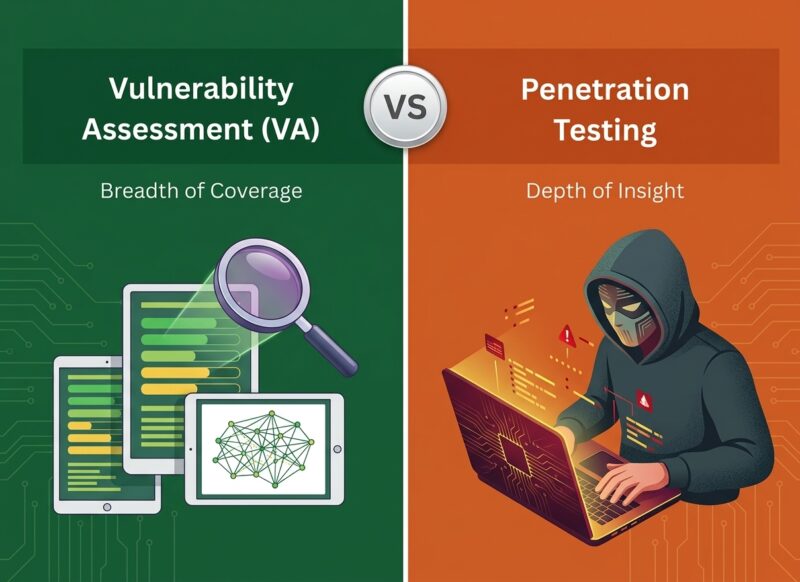
Not all web security assessments provide the same level of assurance. A Web Vulnerability
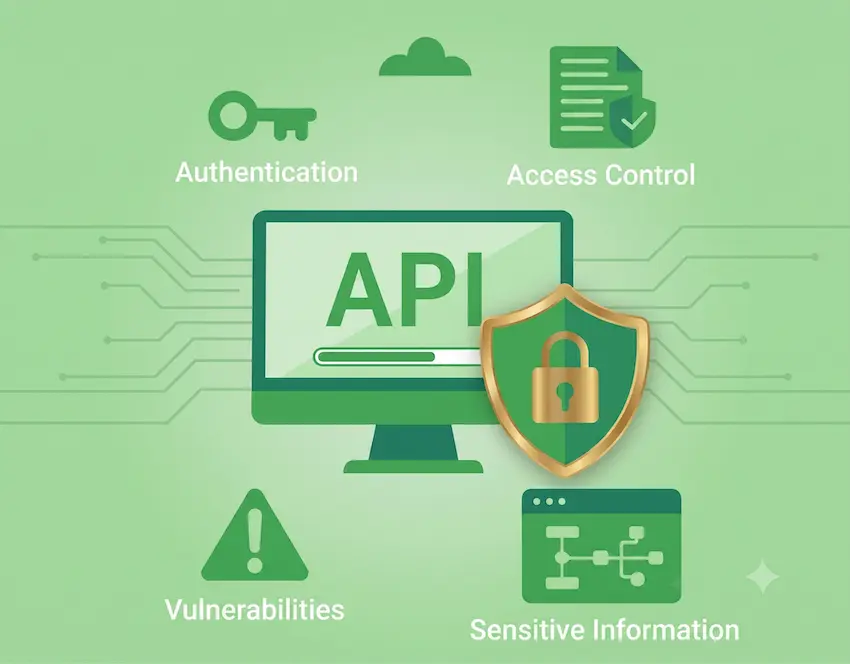
Modern web applications increasingly use Single Page Application (SPA) architectures, where the browser communicates