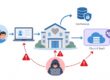


In Hollywood movies, a cyberattack involves a hooded figure in a dark room frantically typing green code to crack a military-grade zero-day exploit in thirty seconds.
In the real world, attackers are much lazier—and much more efficient. They don’t need to burn a million-dollar zero-day exploit when automated bots can scan the entire internet in minutes looking for unlocked doors, forgotten servers, and default settings.
If you want to protect your application from getting hacked, you don’t need exotic defense systems. You need to master the “boring” fundamentals. Here are the top five practical things you can do right now to close the doors attackers actually walk through.
1. Fix Your Security Misconfigurations (The #2 Risk on the Web)
Security misconfiguration has climbed all the way to the #2 spot on the OWASP Top 10, and for good reason: modern apps are stitched together from dozens of cloud services, frameworks, and APIs. Every single one ships with settings that are easy to get wrong.
-
Lock down cloud storage (S3, GCS, Azure Blob): Publicly readable cloud buckets remain one of the easiest ways for attackers to scoop up customer data, invoices, and backups. Enforce “Block Public Access” at the account level, not just per bucket, and use short-lived IAM roles instead of hardcoded access keys.
-
Put a WAF in front of every internet-facing endpoint: Routing your primary domain through a Web Application Firewall (WAF) like Cloudflare or AWS WAF blocks automated SQL injection, cross-site scripting (XSS), and credential-stuffing bots before they ever touch your server. The catch: Make sure attackers can’t bypass the WAF by hitting your server’s underlying IP address directly. Lock down your origin server’s firewall so it only accepts traffic from your WAF’s IP ranges.
-
Turn off debug mode in production: Leaving
DEBUG=Trueenabled or returning full stack traces to users hands attackers a blueprint of your file paths, database structure, and library versions. Log detailed errors internally; show generic messages to users.
2. Patch Outdated 3rd-Party Dependencies
Modern applications are mostly open-source code held together by your business logic. When a critical vulnerability drops in a popular package (think Log4j or a widely used npm library), attackers weaponize scanners within hours—not weeks.
-
Automate dependency alerts: Turn on tools like GitHub Dependabot, Snyk, or Renovate so you know the moment a dependency has a known CVE.
-
Commit your lockfiles: Always commit
package-lock.json,poetry.lock, orgo.sumso builds are deterministic and you aren’t accidentally pulling unverified upstream changes. -
Vet before you
npm install: Software supply chain attacks are surging. Before adding a new third-party library, check when it was last maintained, how many downloads it has, and whether you actually need a whole package for a 10-line helper function.
3. Lock Down Unauthenticated Endpoints (and Broken Access Control)
An exposed API endpoint with no authentication is an open invitation. Even worse is an endpoint that checks who you are, but forgets to check what you are allowed to touch—known as Broken Object Level Authorization (BOLA) or IDOR.
-
Deny by default: Every route and API endpoint should require authentication unless explicitly marked public (like
/loginor/health). -
Verify ownership on every request: If a logged-in user calls
GET /api/orders/9841, don’t just check for a valid session token. Check that order9841actually belongs to that user’s account. Otherwise, an attacker can simply loop through IDs1to10,000and download your entire database. -
Use unguessable identifiers: Prefer UUIDs (
550e8400-e29b-41d4...) over sequential integers (/users/1,/users/2) in public URLs so attackers can’t easily enumerate your records.
4. Kill Legacy Apps and Forgotten Staging Environments
Every company has a “ghost” subdomain—staging.example.com, beta-v1.example.com, or an old marketing microsite built three years ago and never touched again. Attackers love these because they are rarely monitored, often run outdated software, and frequently connect to the exact same production database or internal network.
-
Audit your attack surface: Regularly check your DNS records and cloud accounts for forgotten subdomains, old EC2 instances, and unused load balancers. If nobody owns it, shut it down.
-
Isolate staging from production: Staging environments should never share credentials, API keys, or databases with production.
-
Gate non-production environments: Put staging and QA apps behind a VPN, IP allowlist, or Zero Trust access layer (like Cloudflare Access or Tailscale) so they aren’t indexed by search engines or reachable from the public internet.
5. Strengthen Authentication and Prevent Account Takeover
A strong password and Multi-Factor Authentication (MFA) are important security controls, but they don’t automatically make an account secure.
Attackers don’t always need to crack passwords. They may use stolen credentials, exploit weaknesses in authentication workflows, or steal valid session tokens to gain unauthorised access.
Here are some practical measures:
- Implement MFA properly: Verify OTPs server-side before issuing access or session tokens. Ensure MFA cannot be bypassed through alternative login methods, password reset flows or API endpoints.
- Protect account recovery mechanisms: Password reset and account recovery workflows should be subject to the same security scrutiny as the primary login process. Prevent attackers from exploiting weak verification procedures.
- Enforce re-authentication for sensitive actions: Require users to authenticate again before performing high-risk operations, such as changing registered email addresses, modifying payment details or changing MFA settings.
Security Is a Habit, Not a One-Time Launch Checklist
None of these five fixes will make headlines, and none of them require a massive security budget. Yet together, they eliminate the vast majority of real-world attack vectors. Before your next deployment, run through this list—because the best way to beat a hacker isn’t outsmarting a zero-day, it’s making sure you didn’t leave the front door unlocked.
Need help assessing your organisation’s security?
Find out how Perennial Consultancy can help identify vulnerabilities and strengthen the protection of your organisation’s security through VAPT.
Government Funding Available: If you are a Singapore SME, your organization may be eligible for up to 70% co-funding support under the Cyber Security Agency of Singapore (CSA) CISO-as-a-Service (CISOaaS) scheme.